Start with rights, not resemblance
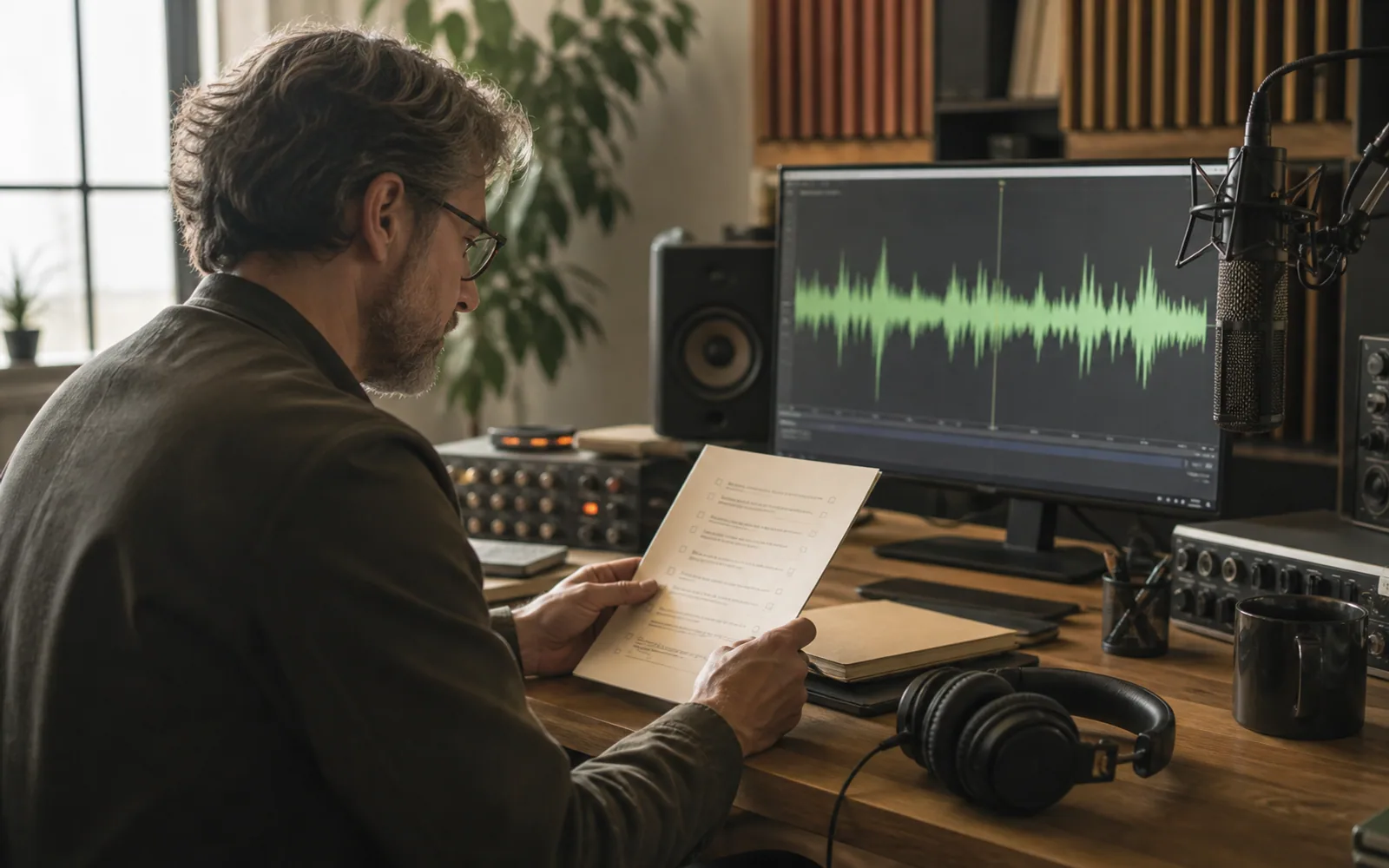
The first production question is not whether a clone sounds impressive. It is whether the organization can prove that the person whose voice is being modeled understood the intended uses and granted permission for them. Record the permitted channels, languages, territories, duration, and people allowed to operate the tool. A generic release is weak if the real workflow later expands into advertising, support calls, or localization that the speaker never considered.
The FTC has documented the consumer harm that can follow voice impersonation, including fraud and appropriation. That does not make legitimate synthesis unusable, but it changes the control standard. Keep the consent record outside the vendor account, give the speaker a clear revocation route, and decide in advance how already published assets will be found and withdrawn. Procurement should reject any workflow that depends on one administrator remembering informal agreements.
Working checklist
- Name the person who owns the original voice rights record and renewal date.
- List every approved channel, language, audience, and commercial use explicitly.
- Define how the speaker can revoke consent and how the team will respond.
- Prohibit cloning from scraped, purchased, or ambiguously licensed recordings.
- Require a release approver who is separate from the person generating audio.
Test the voice on real production material
Vendor demonstrations usually use clean recordings and carefully selected sentences. Your test set should do the opposite. Include product names, dates, acronyms, emotional transitions, questions, long paragraphs, and the languages or accents that matter to the audience. Compare the clone with a human reference using the same script, recording chain, and loudness target. Note pronunciation failures and editing time, because a voice that sounds good but needs constant repairs is not operationally good.
Score intelligibility, pronunciation, pacing, emotional fit, unwanted artifacts, and consistency across repeated generations. Do not collapse those dimensions into one subjective score. A training narration can tolerate different variation from a regulated notice or an emergency message. Set pass thresholds by use case, then run a blind review with listeners who did not configure the model. The result should tell you where the tool is allowed, where it needs supervision, and where it is prohibited.
- Use at least twenty representative lines, including difficult names and numerical content.
- Measure correction minutes per finished minute, not generation speed alone.
- Repeat the same prompt to expose instability that a single demo can hide.
- Check the exported file in the real player, edit suite, and delivery channel.
Control creation, export, and disclosure
A production system needs a short chain of custody. Limit who can upload source recordings, train a voice, generate a file, approve the script, and publish the result. If the vendor offers projects, workspaces, roles, or history, test those features rather than assuming their labels match your policy. Export logs or maintain a release register containing the script version, model or voice identifier, operator, approver, destination, and publication time.
Decide how audiences will be told that audio is synthetic. The disclosure can sit in the media, caption, description, or surrounding page, depending on the risk and context. The goal is not a decorative label. It is to prevent a reasonable listener from believing a person said something they did not personally record. Keep the disclosure language consistent, searchable, and included in localized versions.
Plan for mistakes and provider failure
Write the incident path before launch. It should cover a wrong script, an unauthorized generation, a compromised account, a misleading public use, and a speaker withdrawal. Name who can suspend publication, rotate credentials, contact the provider, preserve evidence, and notify affected people. Test whether deleting a voice also removes generated files, or whether those assets require separate action in your own storage and distribution systems.
Also test ordinary resilience. Confirm export formats, file naming, storage ownership, rate limits, and what happens when the service is unavailable during a deadline. Keep approved source scripts and final masters in systems you control. A cloud voice should not become the only copy of a business-critical asset or the only practical way to revise a mandatory notice.
Make a bounded production decision
Finish the pilot with an allow, allow with controls, or do not allow decision for each use case. A useful record names the evidence reviewed, unresolved limitations, accountable owner, review date, and triggers for reassessment. Revisit the decision when the provider changes its cloning process, permission model, retention terms, or model behavior. The production boundary should move only when new evidence supports it.
For a closer look at one published product implementation, read our ElevenLabs review after completing this control checklist. The review can help you examine product-specific workflow details, but it cannot replace your own rights analysis or real-script test. Keep the general decision framework and the product evidence separate so that a feature update does not erase your governance reasoning.
Questions buyers ask
Frequently asked questions
How much audio should be used to test a cloned voice?
Use the provider's documented minimum only as a starting point. The evaluation should include enough clean, authorized source audio to support the chosen method and a separate test script that represents difficult real production content.
Should every synthetic voice recording be disclosed?
Use a risk-based policy, but disclosure is the safer default when a listener could reasonably believe the named person recorded the message. Keep the wording consistent across the media and its surrounding context.
What is the most useful quality metric?
Correction effort per finished minute is often more useful than a similarity score because it captures pronunciation, pacing, stability, and the human editing work required to publish safely.
Evidence register
Sources used
- Voice cloning concepts and methodsElevenLabs / vendor
- Preventing the harms of AI-enabled voice cloningFederal Trade Commission / regulator
- Generative Artificial Intelligence ProfileNIST / standard
Vendor sources describe documented product capabilities. Standards, regulator guidance, platform documentation, and local validation should shape the final decision.